Why Deck Corners Gap — and How to Fix It
Those gaps that open at your deck's corners aren't a mistake — they're physics. Here's why boards move, why the gaps matter, and how to close them for good on both new and existing decks.
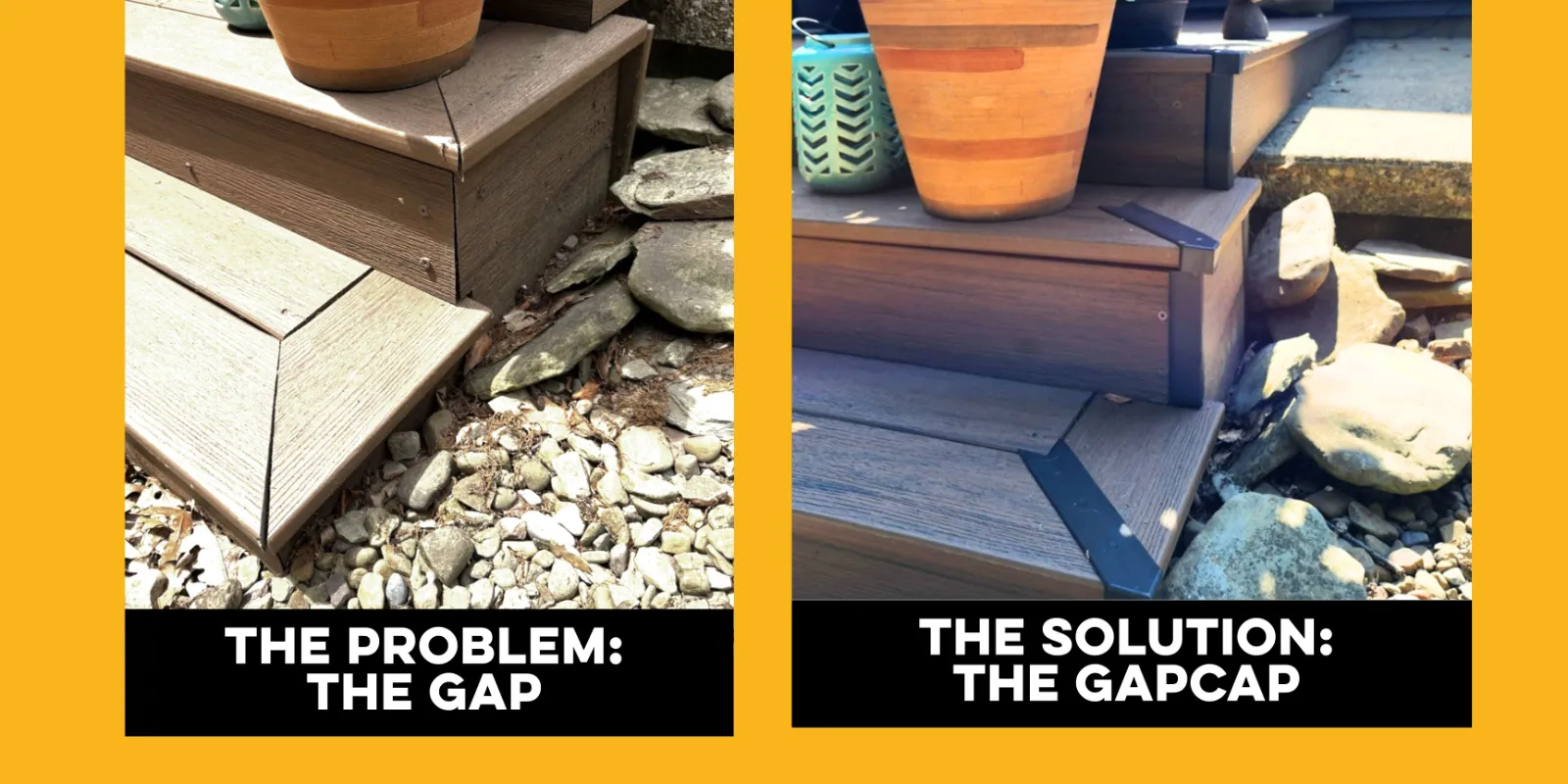
Deck corners gap because deck boards expand and contract as the seasons change. When boards meet at a mitered corner, that natural movement pulls them apart and opens a gap — no matter how perfectly the corner was cut. The fix isn't a tighter miter; it's a cap that covers the corner while letting the boards move freely underneath. Nearly every major decking manufacturer requires a gap at the miter for expansion and contraction — with GAPCAP you build the way the manufacturer intends and never see the gap. Here's the full picture.
Why deck boards move in the first place
Every decking material — pressure-treated lumber, cedar, and composite alike — reacts to its environment. As temperature and humidity rise and fall through the year, boards take on and release moisture and expand and contract with the heat. On a long board, that movement adds up to a meaningful amount of travel across a single season.
In the heat of summer, boards are at their longest and a freshly mitered 45° corner looks flawless. When temperatures drop, the boards shrink back — and the tight seam you cut in July opens into a visible gap by January. Then it closes again the following summer. It's a cycle, which is exactly why "just re-cutting it tighter" never holds.
Deep dive: How seasonal wood movement works →Treated wood vs. composite: how each behaves
Homeowners often assume composite decking is immune to this. It isn't. Composite boards expand and contract too — they just do it differently than wood, responding more to temperature than to moisture. Pressure-treated boards, on the other hand, move a lot as they dry out over their first seasons and then continue to react to humidity for the life of the deck.
The practical takeaway: whether your deck is treated lumber or a premium composite line, the corners will still move. That's why GAPCAP is engineered to work on treated and composite decking alike.
Deep dive: Treated vs. composite at the corners →Why a corner gap is more than a cosmetic problem
An open corner is the first thing the eye lands on — it makes an otherwise beautiful deck look unfinished. But it's not only about looks:
- It collects water and debris. Open miters catch leaves, dirt, and standing water that would otherwise run off.
- It traps moisture where you don't want it. Debris packed into a corner holds dampness against the board ends and the framing beneath.
- It generates callbacks. For contractors, a corner that opens up months after the job is finished means an unhappy customer and a return trip — through no fault of the build.
How to fix gaps on an existing deck
This is the question we hear most: "My deck is already built and the corners are opening — do I have to tear it apart?" No. Because GAPCAP installs over the corner, you don't need to rebuild or replace boards. It works on existing decks just as well as new ones — you cap the corner that's already there.
Installation is quick, with one extra step on a retrofit: because an existing corner is cut tight, you first open up a slightly larger channel for the cap to seat into, using a multi-tool (or similar) to cut out a small channel at the miter. From there the cap fits over the miter fast, fastened to the framing underneath with standard composite decking screws, and includes plugs for a screwless finish. The boards underneath are still free to expand and contract — the gap just isn't visible anymore, and it stays that way through the seasons.
Deep dive: Retrofitting corner gaps on an existing deck →Hiding mitered corner cuts for a clean finish
A picture-frame deck with mitered corners is the look most homeowners want — and the hardest to keep tight. Even a perfect miter is only perfect for one season. Rather than chasing an impossible seam, the reliable approach is to cover the miter with a cap designed for that exact angle.
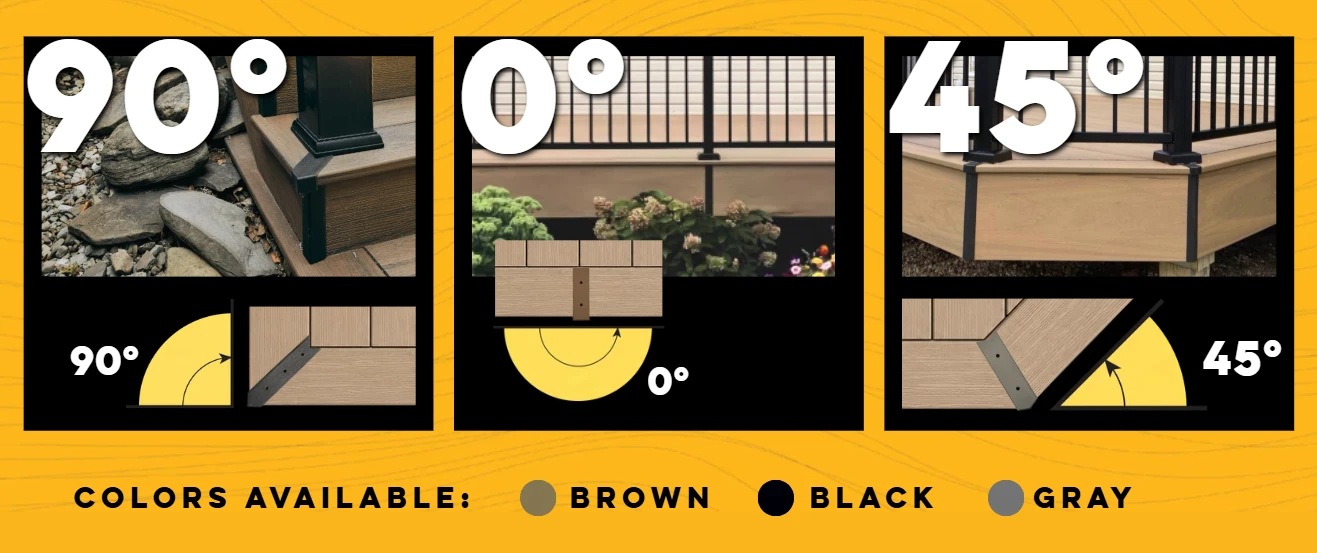
GAPCAP comes in three angles to match how boards actually meet: 0° for straight runs, 45° for angled corners, and 90° for square corners. Every angle is available in both TopCap, which covers the top surface of the corner, and FasciaCap, which covers the fascia-facing edge — so the whole corner reads as one clean, intentional detail.
Deep dive: Hiding mitered corner cuts →The permanent fix: cap the corner
You can't stop boards from moving — that's physics. What you can do is stop the movement from showing. A GAPCAP corner cap hides the gap for good while letting the boards beneath expand and contract freely, on treated or composite decking, new or existing. It's patented, made in the USA, and installs fast — far quicker than chasing a tight miter — with an optional screwless finish.
Frequently asked questions
Deck boards expand and contract as temperature and humidity change through the seasons. At a mitered corner, that movement pulls the two boards apart, opening a gap. It's normal physics — not a sign of poor workmanship.
Yes. GAPCAP™ works on both new and existing decks. Because the cap installs over the corner, you don't need to rebuild or replace boards to get a clean, gap-free finish.
Both. Composite and treated wood boards both expand and contract with the seasons, so both can open at mitered corners. GAPCAP™ is designed to work on treated and composite decking alike.
Beyond looking unfinished, open corner gaps collect water and debris, which can trap moisture against the boards and framing over time. Capping the corner keeps water and debris out while letting the boards move freely underneath.