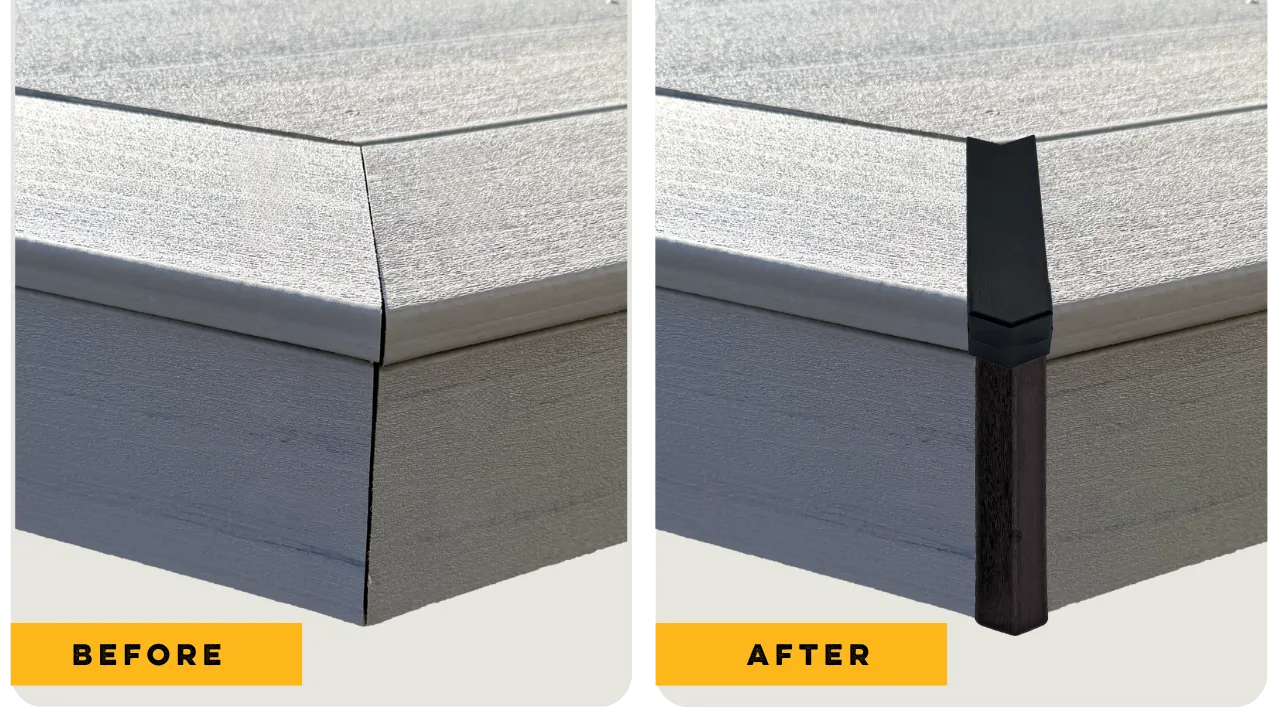
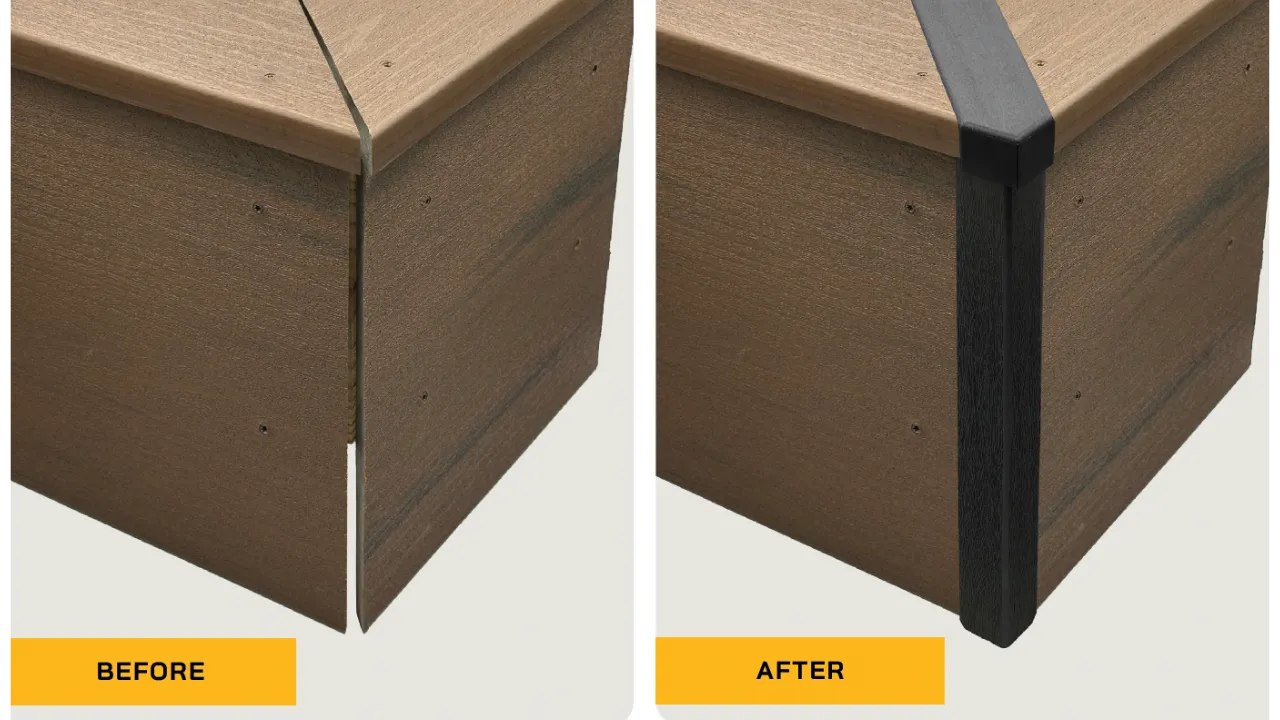
How Seasonal Wood Movement Works
Boards get longer in summer and shorter in winter — and that yearly cycle is exactly what opens the gaps at your deck's corners.
Seasonal wood movement is the expansion and contraction of deck boards as temperature and humidity rise and fall through the year. Boards are at their longest in the heat of summer and shrink back as it cools — and because the movement repeats every year, a corner that's tight in July reliably opens by winter. Here's what's happening and why it matters for your corners.
What causes boards to expand and contract
Two forces drive the movement. The first is moisture: wood is hygroscopic, meaning it absorbs water from humid air and releases it in dry conditions, swelling and shrinking as its moisture content changes. The second is temperature: materials expand when warm and contract when cool. Every decking material responds to some mix of the two.
Why summer looks perfect and winter doesn't
When a deck is built in warm weather, the boards are already expanded, so a freshly cut miter sits tight. As temperatures drop into fall and winter, the boards contract and pull away from each other — and the seam you cut tight in summer opens into a visible gap. Come next summer it closes again. That back-and-forth is why re-cutting a corner tighter never solves it: you're only fixing it for one point in the cycle.
How much movement are we talking about?
The exact figure depends on the material, the board length, and how big your local seasonal swing is — but across a long board over a full season it's enough to turn a clean corner into an obvious gap. Longer boards and bigger temperature and humidity swings mean more movement.
- Board length matters: movement accumulates along the length of the board, so longer runs move more at the ends.
- Climate matters: regions with hot summers and cold winters see the widest swing between the tight and open extremes.
- It never fully stops: treated lumber moves most early on as it dries, but all decking keeps cycling for the life of the deck.
What this means for your corners
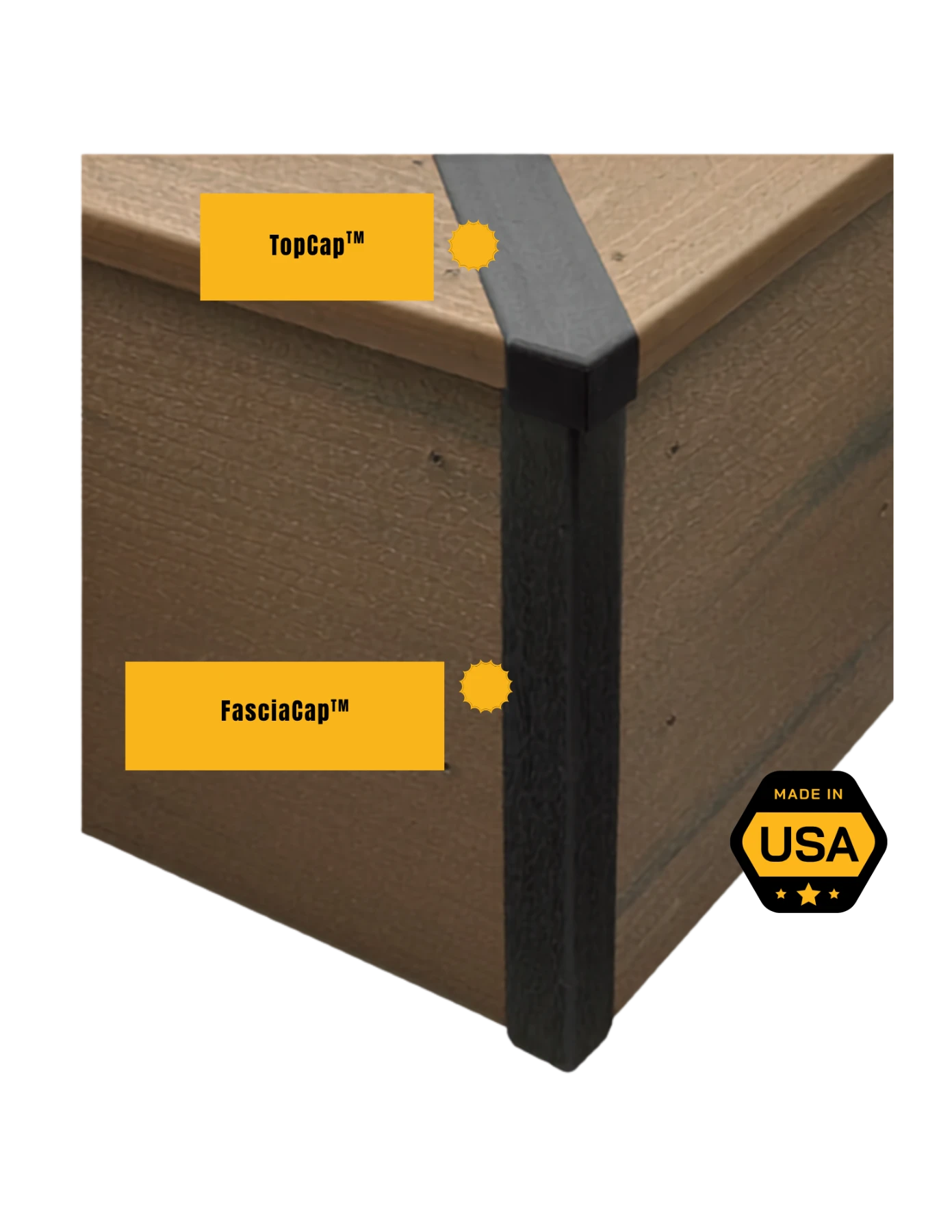
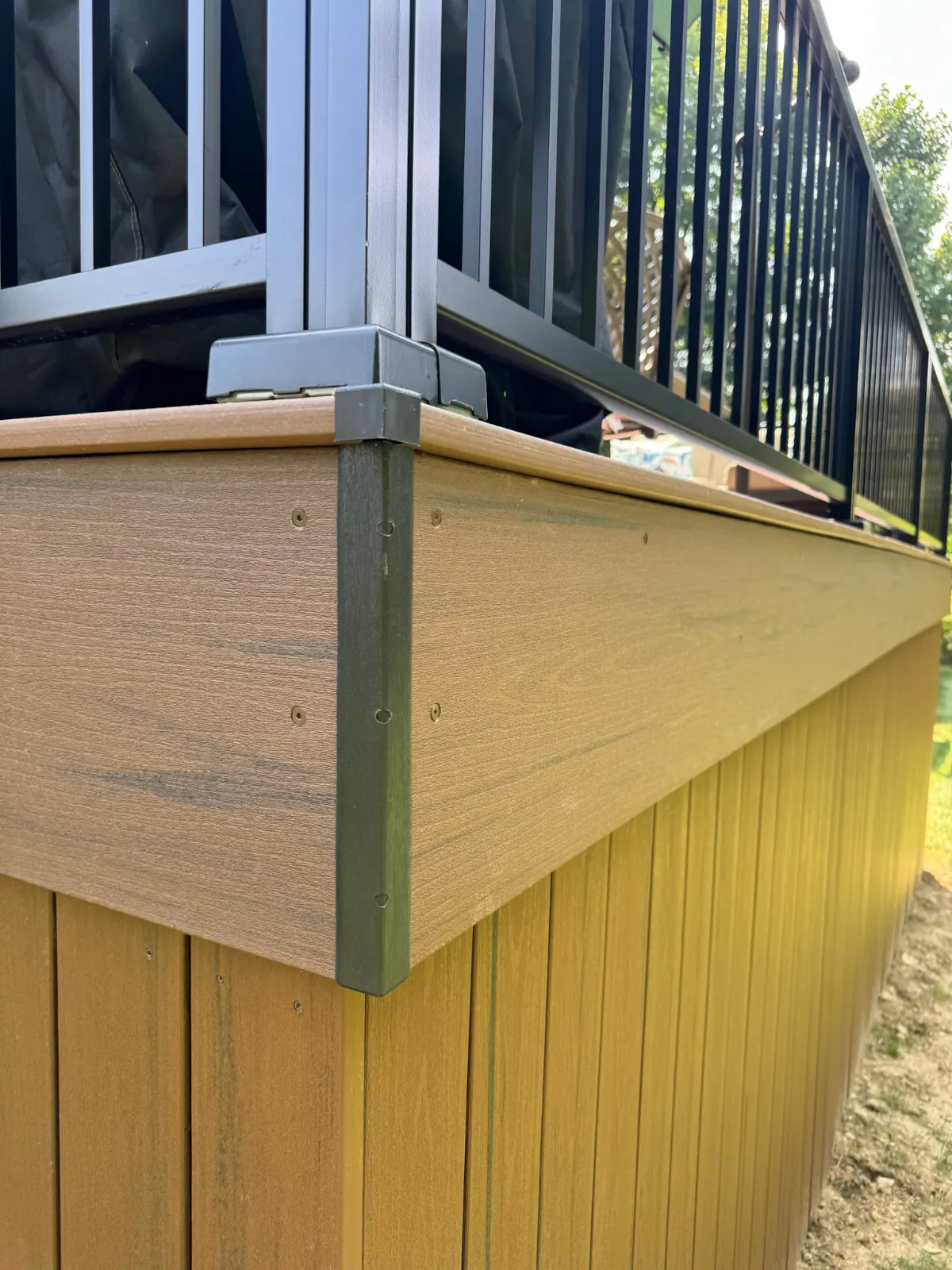
Because the movement is physics, not a defect, you can't build it out with a better cut. The reliable approach is to accept that the boards will move and cover the corner with a cap that hides the gap while leaving the boards free to expand and contract underneath. That's the whole idea behind GAPCAP — and it's why it holds up season after season instead of just one.
Frequently asked questions
It varies by material, length, and climate, but movement across a long board over a full season is enough to open a visible gap at a mitered corner. The longer the board and the bigger the seasonal swing, the more it moves.
No. Pressure-treated lumber moves most as it dries out over its first seasons, but all decking continues to expand and contract with temperature and humidity for the life of the deck. It's a repeating cycle, not a one-time settling.
No — board movement is normal physics you can't design out. What you can do is stop the movement from showing at the corners by capping them, so the boards move freely underneath while the gap stays hidden.